
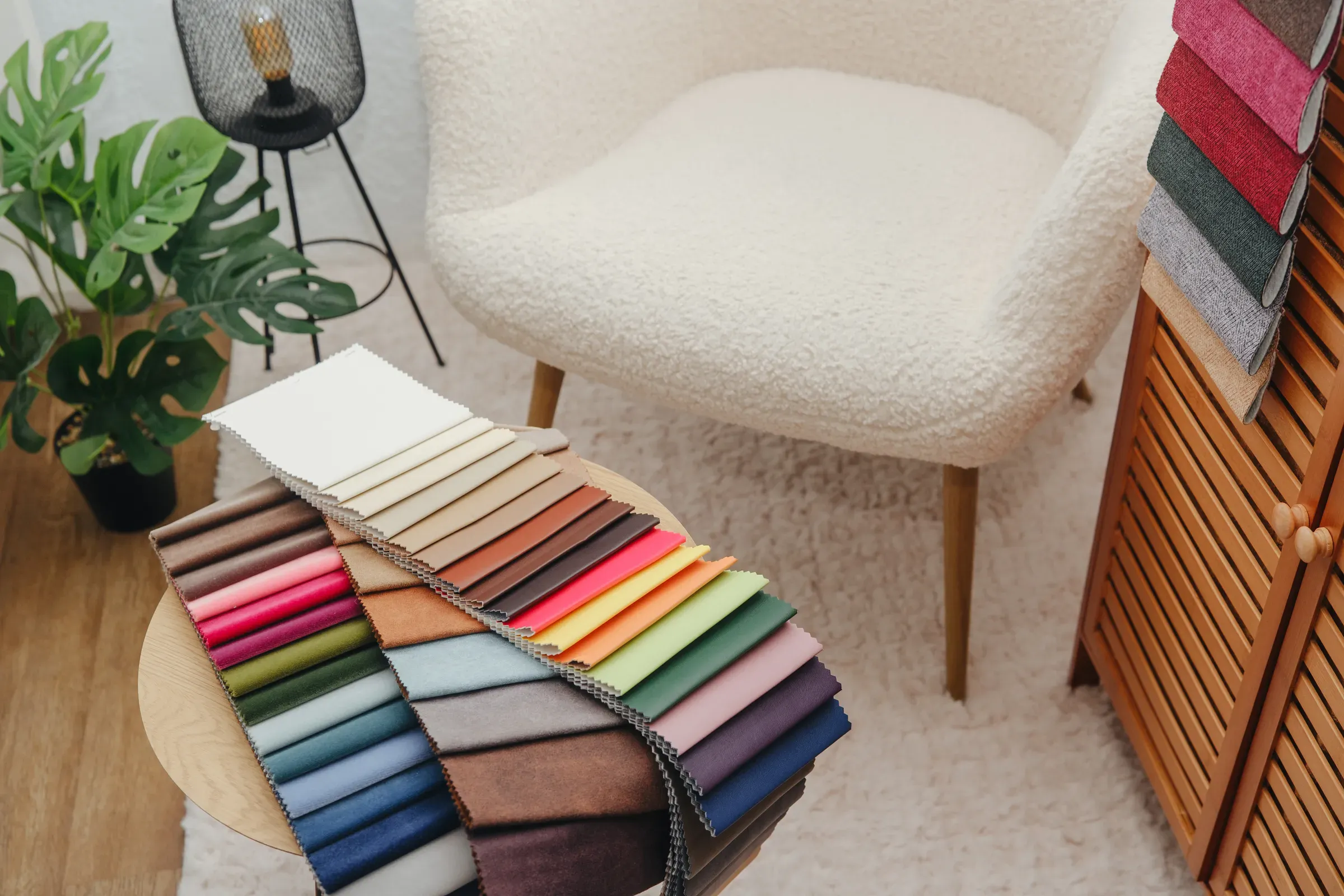
When a restaurant owner complains about their chairs, it's often the fabric: a shiny patch on the front edge of the seat, a pulled thread, a coffee stain that won't come out. The frame can be perfectly sound and the chair still looks tired.
Most of that can be avoided at the quote stage, if you ask for the right test results and look closely at the sample. Here's what we'd check on any commercial chair fabric for a UK or EU order.
Summary
Commercial Chair Fabric at a Glance
The key points, before the detail.
| Item | Short answer |
|---|---|
| Main job | Hold up to daily sitting, spills and cleaning |
| Easiest to wipe | Coated fabrics such as PU leather and vinyl, and some tightly woven fabrics. Check the exact product. |
| Most comfortable look and feel | Velvet and textured weaves, which need more careful cleaning |
| Results to request | Abrasion (with the method named), pilling and snagging, colourfastness |
| Check beneath the cover | Foam type and thickness, and how the cover is fixed to the seat base |
| Fire safety | Check the upholstery rules in each market you sell into |
| EU wood and leather rules | Wood-frame chairs and leather parts may fall under the EUDR from 30 December 2026. Check each model. |
| MOQ | Dining chairs 100 pcs; tables and coffee tables 50 pcs |
| Production lead time | 45 to 60 days |
| Payment | 30% T/T deposit, balance against a copy of the BL within 10 days |
| Samples and response | Samples available; enquiries answered within 24 hours |
We confirm the MOQ for each model in the quotation. EUDR dates have moved before, so check them with your customs broker.
Use Case
What Commercial Upholstery Has to Put Up With
Wear, spills, sunlight and the chance of a re-cover later.
Daily wear
A restaurant seat is sat on many times a day, and the front edge takes most of it as people slide in and out. Two fabrics can look identical on a swatch card and wear very differently, so the test results matter more than the look.
Spills and cleaning
Coffee, sauce, oil and cleaning spray all land on seats sooner or later. Ask your customer which cleaning products their staff use, because some fabrics and coatings handle them better than others.
Light and colour
A chair by the window sits in the sun every day. Ask how the colour holds up to light and rubbing, and look at the fabric under the venue's own lighting. Very dark colours can show dust and lint.
Re-covering and reorders
Find out whether the seat can be re-covered without replacing the chair, and whether the same fabric can be reordered in a year or two.
Materials
Fabric Types and Where They Work
Woven, velvet, bouclé, PU and leather.
Woven polyester and blends
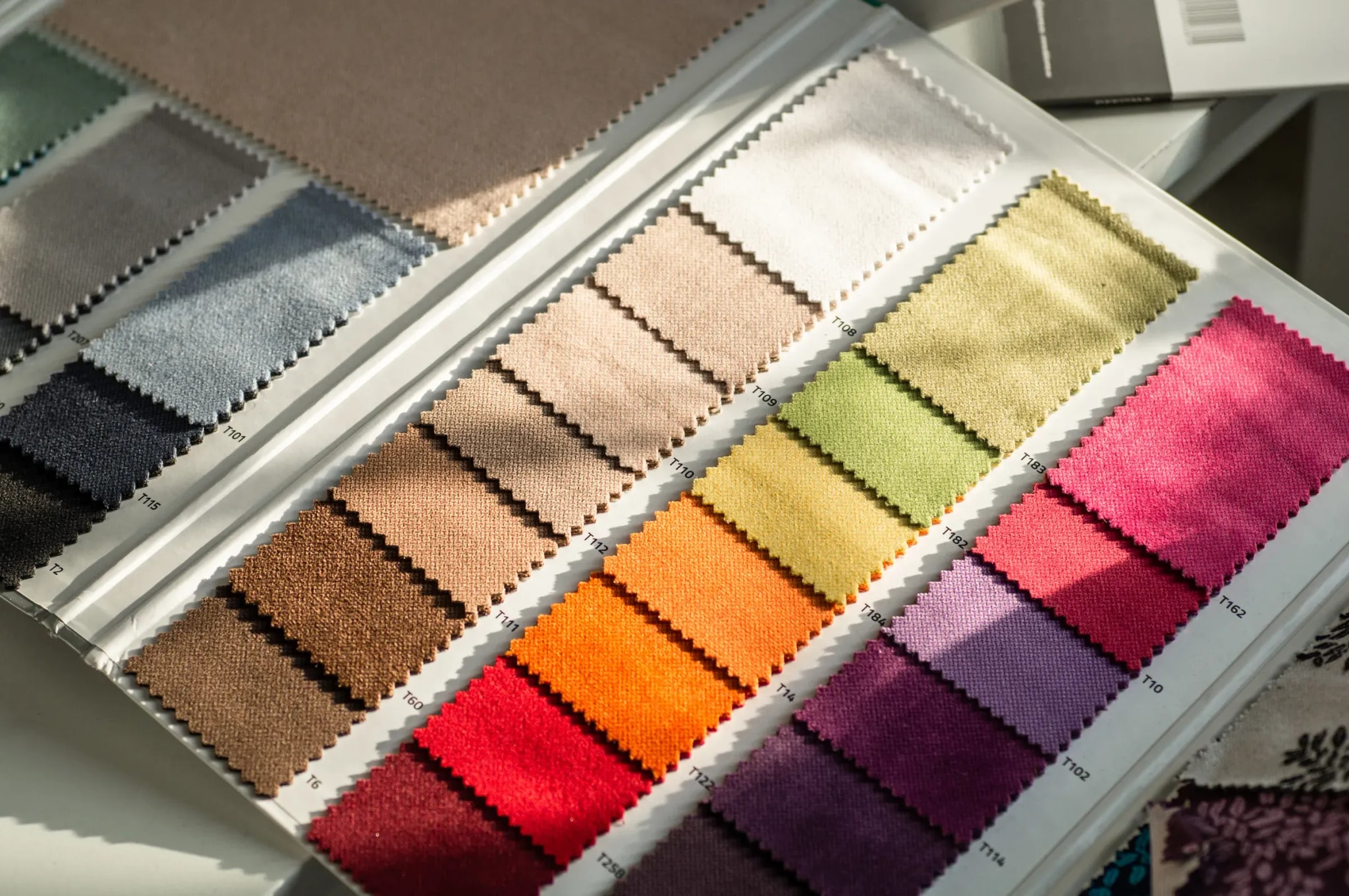
Woven polyester and polyester blends are widely used in commercial seating, and they come in a huge range of colours and textures. Quality varies just as much, so go by the test results for the specific fabric, not the fibre name.
Velvet and pile fabrics
Velvet looks good in hotel dining rooms and lounges. The pile can flatten or mark where people sit, and spills need cleaning quickly. Try a sample before you commit to it for a busy venue.
Bouclé and textured weaves
Textured and looped weaves hide small marks well. The loops can catch on rings, bag zips and watch straps, though, so ask for a snagging result and handle the sample yourself.
PU leather and vinyl
Coated fabrics are quick to wipe, which is why you see them in so many cafes and quick-service places. Ask about the coating and the backing, and look for cracking or peeling at the seat edge on the sample.
Genuine leather
Real leather suits higher-end projects. It costs more and needs different care. If it's going to the EU, check how the EUDR treats it. There's more on that below.
Testing
Test Results to Ask For
Abrasion, pilling, colourfastness, and which fabric the report actually covers.
Abrasion
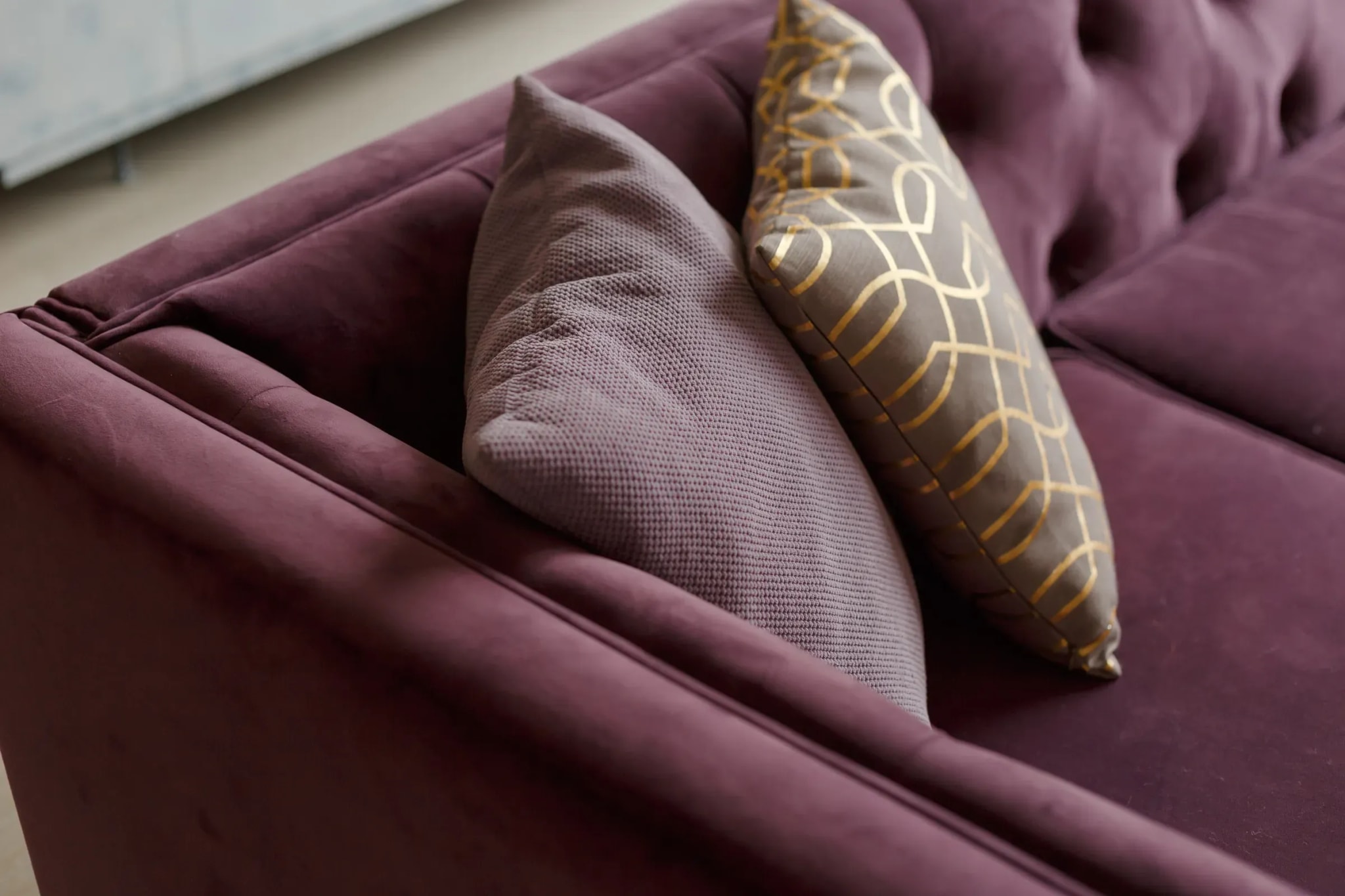
Abrasion testing counts how many rub cycles a fabric takes before it shows wear. Most European buyers will know the Martindale method, usually cited under EN ISO 12947. Ask for the result, the method and the standard, and only compare fabrics that were tested the same way.
Pilling and snagging
Pilling is the small bobbles of fibre that form on the surface. Snagging is pulled threads. Either can make a seat look old quickly, so ask whether the fabric has been tested for both.
Colourfastness
Ask for colourfastness results for light and for rubbing, wet and dry. Nobody wants a guest leaving with dye on their trousers.
Which fabric the report covers
Make sure the report is for the fabric you're actually buying, with the lab and the date on it. A report on a similar fabric from the same mill doesn't count.
Build
Foam, Fixing and Construction
What sits under the fabric matters too.
Foam under the cover
Denser foam holds its shape longer and supports the fabric better. Ask for the foam type and thickness, and press down on the sample seat to see whether you can feel the base.
How the cover is fixed
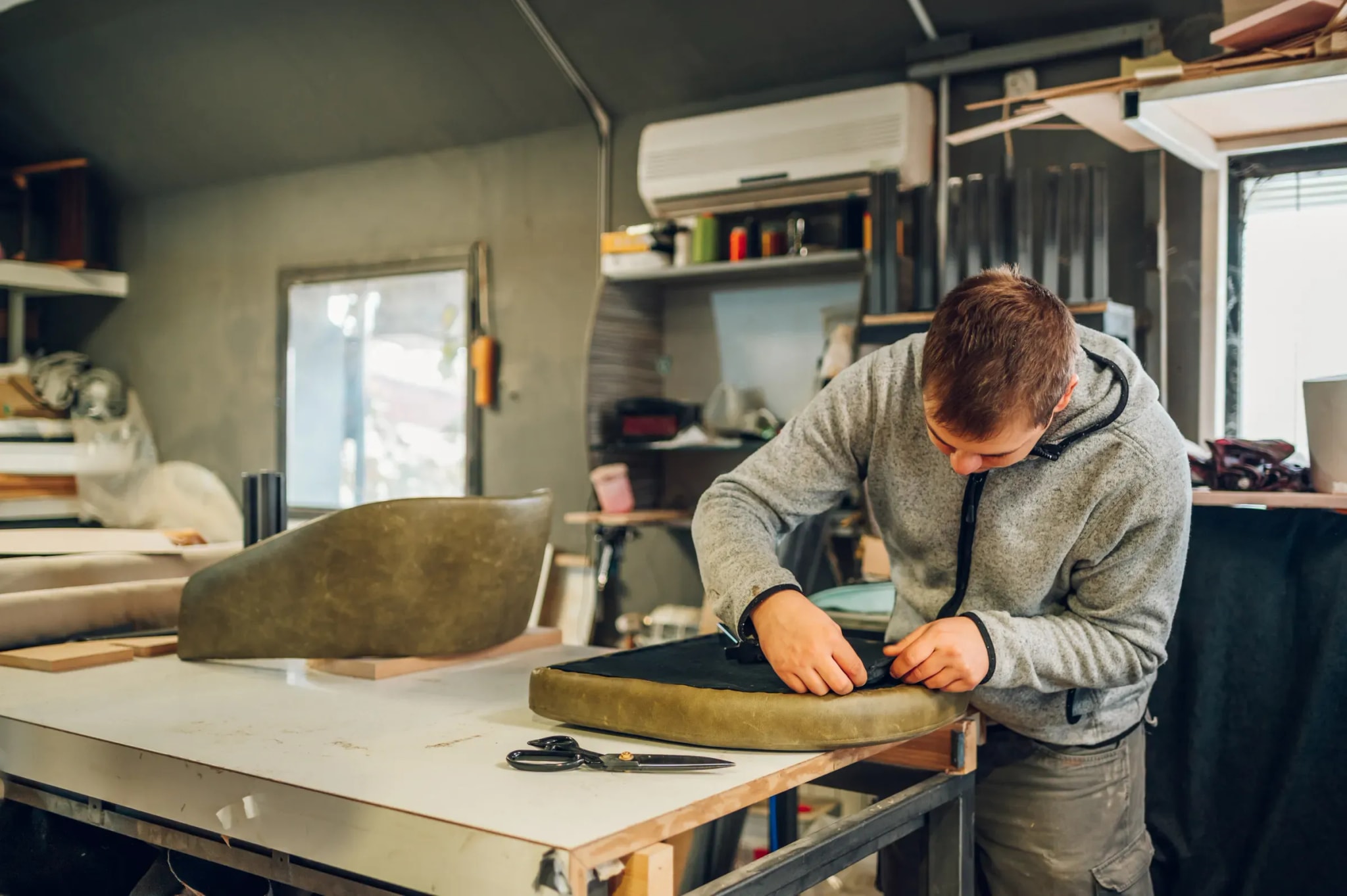
Ask how the fabric is fixed to the seat. It might be stapled underneath, or it might sit on a removable pad. A removable pad makes re-covering much easier later.
Seams, corners and pattern
Seams and curved corners take the most strain. Check the stitching, see how cleanly the fabric is pulled round the corners and make sure stripes or patterns line up.
Venue Fit
Matching Fabric to the Venue
Cafes, restaurants and hotel dining.
Cafes and quick service
Lots of turnover and constant wiping. Coated fabrics, or tight weaves that can take regular cleaning, make the most sense here.
Restaurants and hotel dining
People sit longer, so comfort counts for more. Woven fabrics and velvet work well if the venue is happy to clean more carefully. Look at the fabric next to the table top and under the room's lighting before you decide.
Compliance
Standards and Compliance
What to check for the UK and the EU.
UK fire safety
If you sell upholstered chairs in the UK, check the fire-safety rules for upholstered furniture and fabrics. They differ between domestic and contract use, so ask your compliance adviser to confirm what applies.
Chemical rules
Dyes, coatings and fire-retardant treatments can fall under chemical restrictions in the EU and the UK. Ask the supplier what paperwork they can give you, and check it with your adviser.
EUDR for wood and leather
The EU Deforestation Regulation is due to apply from 30 December 2026. Treat wood-frame chairs as in scope. Leather is a listed commodity too, so any leather or wood-based part needs checking with your customs broker. The dates have moved before. Our post on EUDR for furniture importers lists the data to request.
Terms
Ordering Terms
MOQ, lead time, payment, samples and fabric changes.
MOQ, lead time and payment
For dining chairs our MOQ is 100 pcs, and tables and coffee tables start at 50 pcs. Production takes 45 to 60 days. We ask for a 30% T/T deposit, and the balance is due within 10 days against a copy of the BL. Whoever you buy from, ask when the lead time starts. With upholstered chairs, fabric confirmation is often what sets the date.
Approve a sample in your fabric
Order a sample in the exact fabric and colour. Look at it under the light the venue will have, wipe it and approve it in writing. Keep it as the reference for production. Samples are available.
OEM, ODM and fabric changes
With OEM, we build to your drawings. With ODM, you choose a chair from our range and we adapt it. On most chairs you can change the fabric. Agree the fabric, colour and any repeat orders in writing, and ask how colour differences between batches are handled.

Checklist
How to Choose Upholstery for a Wholesale Order
Six things to check with every factory you're comparing.
- Know the venue. How do people use the seats, how are they cleaned, and how much sun do they get?
- Shortlist two or three fabric types. Compare them on cleaning, comfort and look, and drop anything your customer can't maintain.
- Get results for the exact fabric. Abrasion with the method named, pilling and snagging, and colourfastness, with the lab and date.
- Look under the cover. Check the foam type and thickness, how the cover is fixed and whether the seat can be re-covered.
- Check the rules. Confirm UK fire safety, chemical restrictions and the EUDR with your advisers.
- Put it in the quotation. Fabric, colour, MOQ, lead time, payment terms and the approved sample should all be in writing.
Browse our wholesale dining chairs, check the FAQ for MOQ, lead time and payment, or read about our quality control and OEM/ODM services.
FAQ
Frequently Asked Questions
Quick answers on terms, testing and EU rules.
What is the best upholstery fabric for commercial dining chairs?
It depends on the venue. Coated fabrics suit busy cafes, woven polyesters cover most restaurants, and velvet suits hotel dining where cleaning is more careful. Whatever you choose, look at the test results for that exact fabric.
Which fabric tests should I ask for?
Abrasion with the method named, pilling and snagging, and colourfastness to light and rubbing. Check that the report covers your exact fabric, and note the lab and the date.
Can I choose my own fabric and colour?
On most chairs, yes, under OEM or ODM. Approve a sample in your fabric and colour before full production starts.
What are the MOQ, lead time and payment terms?
Dining chairs start at 100 pcs and production takes 45 to 60 days. We take a 30% T/T deposit, with the balance due within 10 days against a copy of the BL. We confirm the MOQ for each model in the quotation.
Does the EUDR apply to upholstered chairs?
For the EU, treat wood-frame chairs as in scope from 30 December 2026. Leather is a listed commodity as well. Check each model with your customs broker.
Work With U-LIKE
Planning an Order With Your Own Fabric?
Send us the chairs you're looking at, the fabric you have in mind, the quantity and the destination port. We'll reply within 24 hours with a quote and sample options.