
Behind the Scenes: Crafting an MDF Table from Start to Finish
Author
Sunny Zhang
Date Published
Today, we have the honor of inviting our Product Director to show us how an MDF table is made. Let’s embark on this revealing journey together and follow each step along the way!
We’re currently in our warehouse where we store all our table-term resources. Here, you’ll find that all our materials come straight from our suppliers, specifically for each type of MDF furniture.
Material
First, let’s introduce the material used for the table – MDF(medium-density fiberboard). MDF is a composite wood product made from wood fibers and resin. It is known for its smooth surface and uniform density. The boards are made using wooden powder, without any cover on the bottom or outside. The raw material comes in various sizes, ranging from 1.2m to 2.4m, and thicknesses, ranging from 18mm to 30mm.
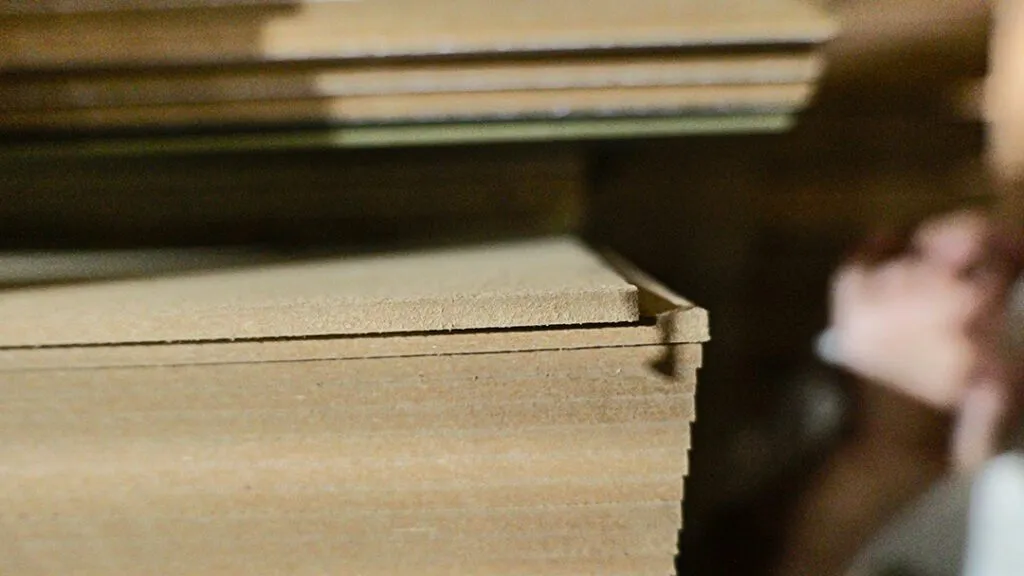
MDF board without any Cover (The Raw Material)
We offer three choices for the MDF table categories:
– MDF with melamine cover
– MDF with veneer paper cover
– MDF with painting cover
– MDF with wood veneer cover
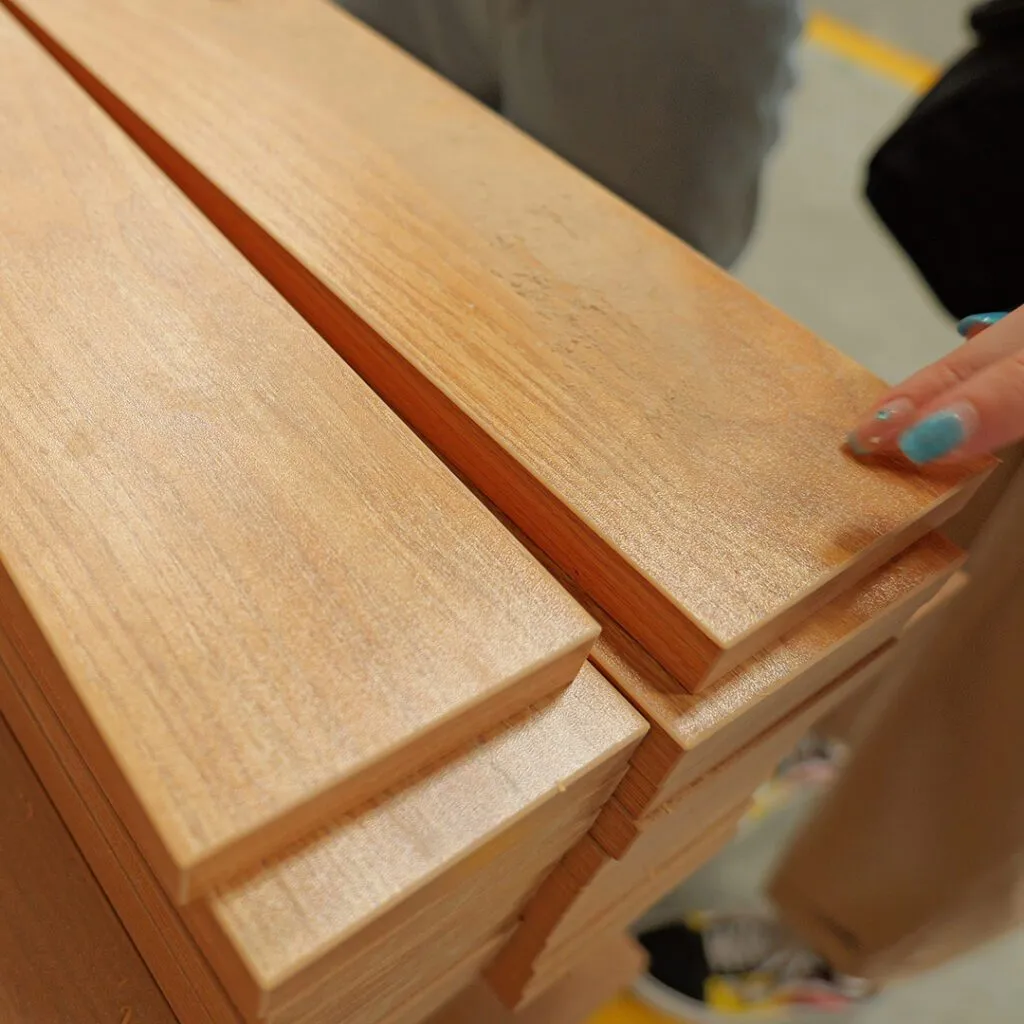
Melamine
Wood veneer
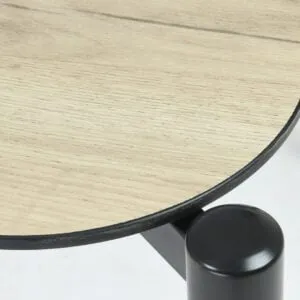
Veneer paper
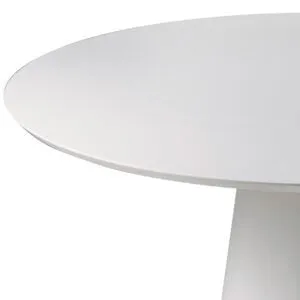
Painting
– Melamine is a synthetic resin commonly used to coat furniture and cabinetry, providing durability and resistance to scratches and heat.
–Veneer paper is a thin layer of decorative paper or wood veneer used to cover surfaces to achieve the desired aesthetic.
–Painting involves applying pigment to a surface, usually to add color or protection to different materials.
–Wood veneer is a thin layer of wood typically used for covering surfaces, giving them a natural wood appearance.
(Tips: The fumigation technique meets the requirement)
When we buy materials from suppliers, some of the MDF materials are already fumigated to meet custom requirements in specific areas, while others aren’t. For the non-fumigated materials, our operations department must handle the fumigation task during product export.
Pressing
We purchase raw materials with a thickness ranging from 0.3 to 3.0cm. Occasionally, we need a thicker tabletop, around forty mm, where two boards are joined using a specific machine to create the desired thickness. This workshop specializes in this type of work.
For example, the plates above and below are thin, while the middle part is hollow and filled with foam. We use a board with this thickness for the outer layer, leaving the inside hollow. By using boards like these for the top and bottom, the tabletop achieves the desired thickness.
However, for the middle section, some solid parts are unnecessary due to weight control considerations. If the tabletop becomes too heavy, it may cause problems. We sometimes place metal inside as well — To ensure the plate remains straight and unaffected by factors such as high temperature and humidity, we add two iron plates in the middle. This is because MDF tends to slightly bend under certain conditions.
Cutting
In our all-in-one production line for cutting, trimming, and punching, we ensure top-notch speed and efficiency.
Within the cutting workshop, we have an automated machine dedicated to cutting raw materials. Although it requires a worker to move the boards, this machine excels at creating various shapes like patterns and graphics.
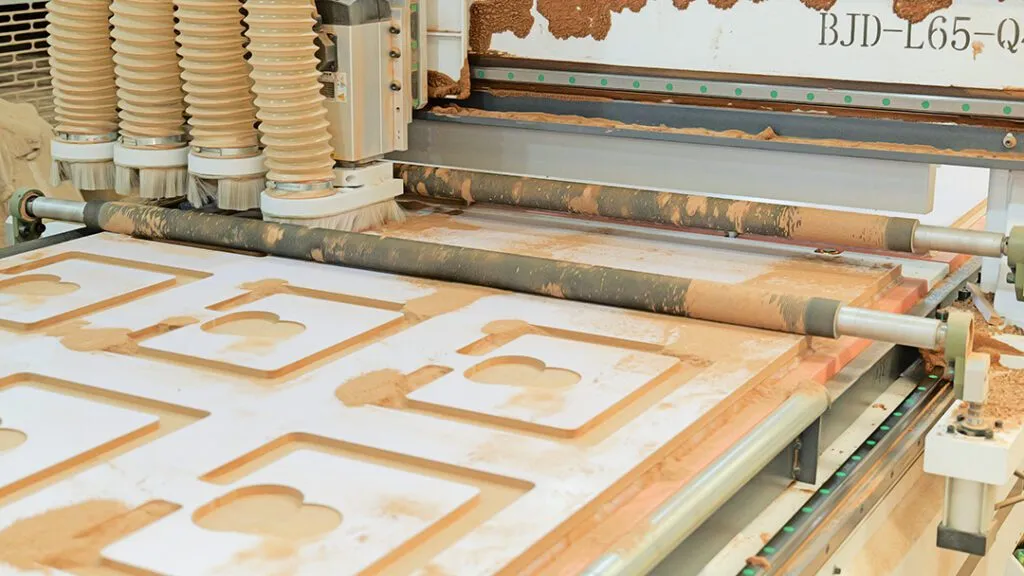
Pattern carving machine
For instance, when we need tables with unique waving edges or custom designs, this machine effortlessly cuts any pattern or hollow by simply connecting it to a computer. Our skilled designer creates the pattern design and transfers it to the factory’s computer, enabling seamless operation with the machine.
Prior to commencing the cutting process, we input the required model or data into the machine. When dealing with drawers that demand holes for future connections, our machine precisely cuts them to perfection. By entering the precise size requirements into the computer beforehand, we ensure accurate results and prevent any discrepancies or data errors.
Following the cutting process, we understand the necessity of polishing. Some boards may have a rough surface post-cutting, so we meticulously polish them by hand to achieve a smooth and refined shape.